Blog
Top Container Conversion Ideas in Canada for Modern Living

Top Container Conversion Ideas in Canada for Modern Living: What You Need to Know First
If you've been browsing container homes designs pictures online and thinking, "Is this actually doable in Canada?" the short answer is yes, and it's more practical than most people expect.
Container conversions in Canada have moved well past the novelty stage. Whether you're a homeowner in Alberta looking at shipping container homes Alberta projects, a contractor sourcing finished container homes for sale, or a small business owner exploring conteneur pour commerce possibilities, the fundamentals are the same: a shipping container gives you a durable, modifiable steel shell that can become almost anything.
At Maple Containers, we work with construction companies, retailers, farmers, event organizers, and everyday Canadians who want more from their space — without the cost and timelines of traditional builds. This guide walks through the top container conversion ideas in Canada, honest cost expectations, insulation realities for cold climates, and the practical details that actually matter before you commit.
No hype. Just what you need to know.
Why Container Conversions Are Growing in Canada
Canada's housing, commercial, and agricultural sectors are all dealing with the same problem: the cost and speed of conventional construction. A standard build in most Canadian provinces means permits, contractors, supply delays, and budgets that keep shifting.
A converted container sidesteps a significant chunk of that friction. The structural shell is already there. A standard 40-foot unit — weighing around 3.75 tons empty, though cargo loads can reach 26+ tons — arrives with weather-sealed steel walls, a load-bearing roof, and a floor that's ready to modify. From there, the customization options are extensive.
Beyond cost, Canadians are increasingly drawn to the sustainability angle. Repurposing a used sea can means diverting heavy steel from the waste stream and reducing the material consumption of a new build. That matters to homeowners, developers, and businesses alike — and it's one reason the best container home designs increasingly feature reclaimed and recycled finishing materials alongside the container itself.
The market has also matured. You can now find 40 shipping container home plans from architects who specialize in Canadian climates, and suppliers offering containers for sale with modification packages built in. The learning curve is much shorter than it was five years ago.
Turning Containers Into Affordable Housing Units
Among all the top container conversion ideas in Canada, residential conversion draws the most interest — and the most questions.
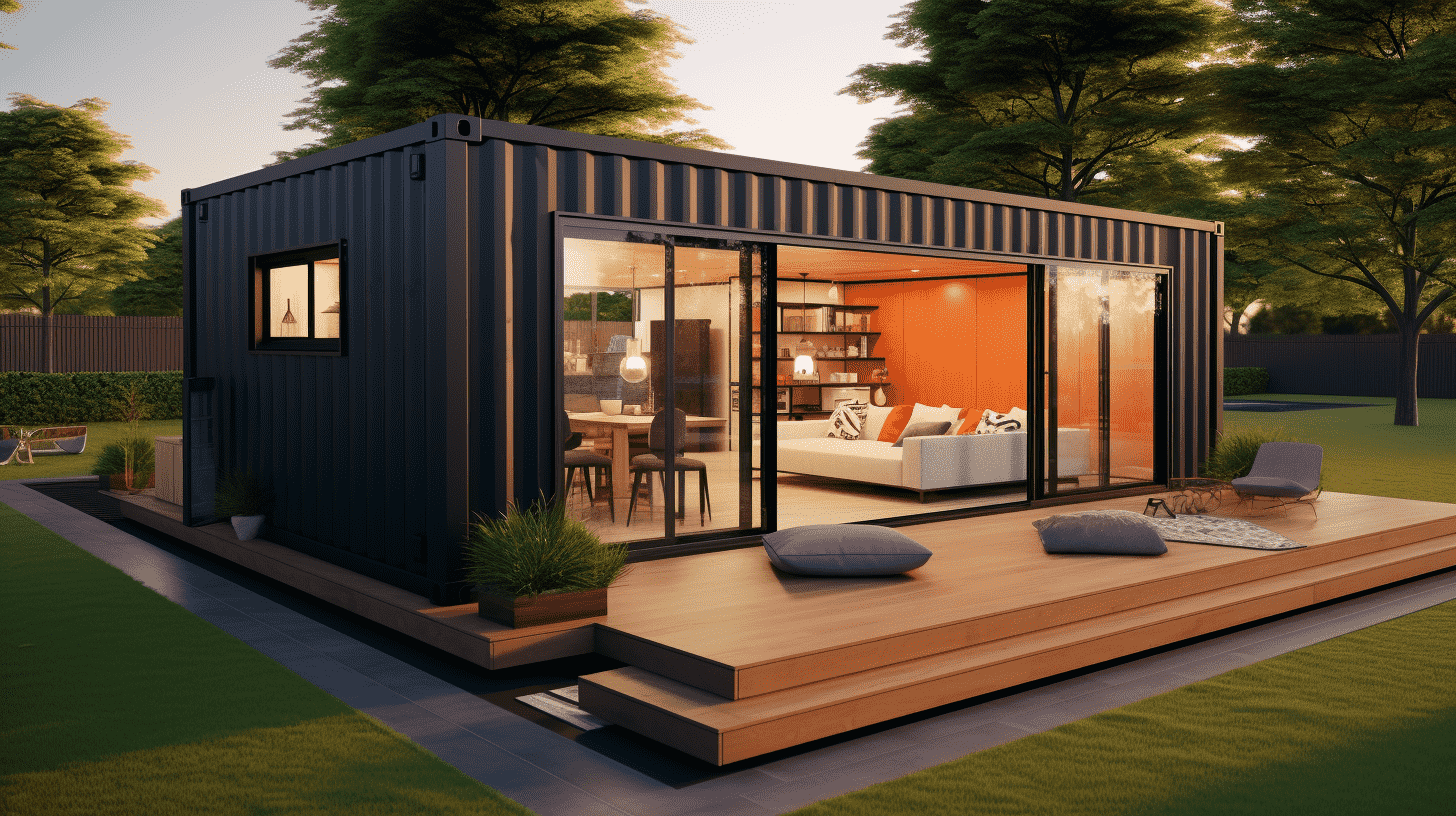
A basic single-unit container home starts as either a 20-foot or 40-foot shell. Most serious residential projects use the 40-foot high-cube format, which gives you around 320 square feet of interior space at a ceiling height of 9.5 feet. Stack two units side by side and you're looking at a comfortable open-plan home. Go vertical with two stacked containers and you have a two-storey structure.
For families, 4 bedroom shipping container home plans are achievable by joining four or more containers in an L-shape or U-shape layout, with a central corridor or shared living area. Shipping container homes Alberta projects frequently use this configuration because the larger footprint helps offset the insulation needs of a cold climate.
What makes residential conversion work in Canada:
- Spray foam insulation applied directly to the steel interior is the most effective solution for cold regions. It seals moisture and provides strong thermal resistance (more on this below).
- Vapour barriers are non-negotiable in Canada. Steel sweats. Without a proper barrier between your insulation and interior finish, you'll have condensation problems within a season or two.
- Foundation choices matter. Concrete piers, helical piers, or a poured slab all work — the right choice depends on your soil, site, and local building code.
- Zoning and permits are the most overlooked factor. Rules vary considerably by municipality. Some areas in BC and Ontario have well-established pathways for container housing approvals; others require a variance. Always check with your local planning office before purchasing.
Finished container homes for sale do exist across Canada, and buying pre-converted can save significant time if you're not looking to manage a custom build from scratch.
Container Offices for Remote Work in Canada
The shift toward remote and hybrid work has made the backyard office or on-site container office one of the most practical conversion ideas for Canadian homeowners and businesses.
A 20-foot converted container fits comfortably as a private workspace. Add a personnel door, two or three windows, electrical outlets, LED lighting, and climate control — and you have a functional office that doesn't require you to commute or share bandwidth with your household.
For construction companies and site managers, a modified container office placed on-site provides secure storage and administrative space in one unit. These are popular as top container solutions because they combine portability and durability: the office moves when the job moves.
Retailers and small businesses are also using container offices as pop-up storefronts, ticket booths, and conteneur pour commerce units particularly at seasonal markets and outdoor event spaces. The visual storytelling potential here is real. A well-finished container with clean branding, good lighting, and thoughtful exterior design attracts attention in ways a tent or prefab structure simply doesn't.
How Much Does a Basic Container Conversion Cost in Canada?
Top container conversion ideas in Canada cost is one of the most-searched questions in this space — and the honest answer is: it depends, but here are real benchmarks.
| Conversion Type | Estimated Cost Range (CAD) |
|---|---|
| Basic storage/workshop setup | $3,000 – $8,000 |
| Office conversion (20-ft) | $10,000 – $25,000 |
| Residential studio/single unit | $30,000 – $65,000 |
| Full home (multi-container) | $80,000 – $200,000+ |
| Pop-up retail or commerce unit | $15,000 – $40,000 |
Note: Top container price varies by condition (new vs. used), size, and your location in Canada. Delivery, site prep, permits, and finishing materials are separate costs.
The container home made easy prix model buying a partially finished unit — sits in the middle range and can reduce your build timeline significantly. If you're comparing this to a traditional home build in Canada, the cost-per-square-foot advantage is real, though it shrinks as you add higher-end finishes.
For commercial buyers or those importing, understanding CBM conteneur 20 pieds (cubic metre capacity of a 20-foot container — approximately 33 CBM) is useful when assessing shipping costs and product storage capacity.
What Materials Work Best for Insulation in Cold Regions?
This is one of the most practically important questions for anyone pursuing shipping container homes Canada projects and it deserves a direct answer.
Spray polyurethane foam (SPF) is the go-to for most Canadian container builds. It adheres directly to the steel, fills gaps completely, and provides both insulation and a moisture barrier in one application. Closed-cell SPF achieves an R-value of around R-6 to R-7 per inch, which means 3–4 inches gives you a solid thermal envelope for most Canadian climates.
Rigid foam board (polyisocyanurate or XPS) is a cost-effective alternative. It's effective, but requires careful installation around seams and corners to prevent thermal bridging a particular vulnerability with steel-framed structures.
Mineral wool (rockwool) is increasingly popular in high-performance builds. It's fire-resistant, handles moisture well, and has excellent acoustic properties useful in container offices or mixed-use builds.
For extreme climates like northern Alberta or Saskatchewan, combining spray foam with exterior insulated cladding gives you the best thermal performance without sacrificing too much interior space.
Can Shipping Containers Withstand Canadian Winters?
Yes — with the right preparation, they handle Canadian winters well. The steel shell itself is built to survive ocean transport, which means salt air, heavy loads, and stacking pressure. A Canadian winter is actually less demanding on the structure than what a container experiences at sea.
The real challenges are thermal and moisture-related, not structural:
- Thermal bridging: Steel conducts cold. Without proper insulation, the walls will be cold to the touch and condensation will form. Address this at the insulation stage.
- Roof snow load: Standard containers are designed to carry significant roof loads, but if you're in a heavy snowfall area, confirm your unit's rated capacity and consider a sloped roof addition.
- Door seals: Factory door gaskets hold up well, but check them annually. Cold-climate projects sometimes upgrade to Arctic-rated seals.
- Foundation frost heave: This is where site prep matters most. A properly designed foundation below the frost line prevents the structure from shifting through freeze-thaw cycles.
The best shipping agency in Canada will be able to advise on container condition and grade before purchase. Always inspect or request a grade report (IICL or equivalent) before committing to a unit for residential or long-term commercial use.
Maintenance Tips for Long-Term Container Use
A well-maintained converted container will last 25–30 years with minimal structural issues. Here's what that maintenance actually looks like:
Annual checks:
- Inspect exterior paint and coatings for chips, rust spots, or bubbling. Treat any surface rust immediately with a rust-inhibiting primer before recoating.
- Check roof drainage. Containers have a slight crown, but debris accumulation can hold water and accelerate corrosion.
- Inspect door seals and hinges. Lubricate hinges with a dry lubricant; replace seals if they're cracking or compressing unevenly.
Every 3–5 years:
- Reapply exterior protective coating, especially in coastal regions where salt air accelerates corrosion.
- Inspect and reseal any penetrations (cable entry points, plumbing, HVAC connections).
Interior:
- Maintain interior humidity below 60% to prevent mould on organic finishes (wood, drywall). A small dehumidifier or properly sized HVAC with humidity control handles this easily.
- Inspect insulation for compression or moisture intrusion at wall junctions.
Containers used as conteneur pour commerce or retail pop-ups have slightly different maintenance priorities — exterior appearance matters more, so budget for regular repainting and branding refresh every 2–3 seasons.
Key Features to Highlight
When evaluating any container conversion — whether you're buying finished container homes for sale or planning a custom build — here are the features that actually determine long-term value:
Customization Options The best container home designs allow for full interior layout flexibility. Look for suppliers who offer partition walls, window cutouts, roll-up doors, personnel doors, electrical rough-in, and plumbing prep before delivery. This saves significant on-site labour costs.
Mobility and Portability A converted container retains its ISO corner castings, meaning it can be craned, trucked, and relocated. This is a genuine advantage over permanent structures — particularly for contractors, farmers, and event organizers who need flexible infrastructure.
Durability and Security Corten steel construction is inherently resistant to impact and weather. Pair this with a quality lock box and puck lock system, and a container is genuinely difficult to breach — more so than most wood-framed alternatives.
Visual Storytelling Exterior finishes, cladding choices, lighting, and landscaping integration all contribute to how a converted container reads in its environment. For retail and commercial applications, this is a marketing asset. A well-presented converted container stands out.
Sustainability Repurposing a used sea can reduces embodied carbon compared to a new build. Many Canadian developers are now factoring this into LEED calculations and green building certifications.
Frequently Asked Questions (FAQs)
Q: What are the top container conversion ideas in Canada right now?
A Residential housing units, remote work offices, agricultural storage, retail pop-ups (conteneur pour commerce), event spaces, and backyard studios are the most common. Multi-container configurations for 4 bedroom shipping container home plans are gaining ground in Alberta and BC.
Q: How much does a top container conversion cost in Canada?
A basic workshop or storage conversion starts around $3,000–$8,000. A livable residential unit (single container) runs $30,000–$65,000. Full multi-container homes with high-end finishes can exceed $200,000. Always budget separately for site prep, permits, and delivery.
Q: Are shipping container homes legal in Canada?
Yes, in most jurisdictions, though zoning rules vary by municipality. Shipping container homes Alberta, Ontario, and BC all have examples of approved projects. The key is engaging your local planning department early.
Q: How many tons are in a 40-foot container?
An empty standard 40-foot container weighs approximately 3.75 metric tons. The maximum gross weight (container + cargo) is typically 30.48 metric tons, though this varies by manufacturer.
Q: Can I buy containers for sale in Europe and ship to Canada?
Yes, though importing adds logistics complexity. Most Canadian buyers find that working with a domestic supplier — including those offering containers for sale already in-country — is faster and more cost-effective. Working with the best shipping agency in Canada can simplify the import process if you have a specific container in mind.
Q: What is the CBM of a 20-foot container?
A standard 20-foot container (CBM conteneur 20 pieds) holds approximately 33 cubic metres of cargo volume. This is useful for planning storage capacity or calculating shipping costs.
Q: How do I get started with Maple Containers?
Visit maplecontainers.ca to browse available inventory, get a quote, or speak with the team about customization options for your project. Whether you're a contractor, homeowner, retailer, or farmer there's a configuration that fits.
Ready to explore the top container conversion ideas in Canada for your specific situation? Contact Maple Containers today and let's talk through what's possible.