Blog
Why Container Conversions Are Growing in Canada

Why Container Conversions Are Growing in Canada: What Every Business and Homeowner Should Know
If you've been paying attention to the construction, retail, or agricultural landscapes across Canada, you've probably noticed that shipping containers are showing up in places they never used to. Converted into offices, pop-up shops, farm storage, and even homes — why container conversions are growing in Canada isn't really a mystery once you understand what's driving the demand. It comes down to three things most Canadians care about deeply: practicality, cost, and durability. At Maple Containers, we've watched this shift happen firsthand, and we're here to break it all down for you — no fluff, no jargon.
What Is Containerisation, and Why Does It Matter in Canada?
Before we get into conversions, it helps to understand what containerisation actually is. In transport, what is containerisation refers to the standardisation of cargo into uniform steel boxes that can be stacked, shipped by sea, rail, or truck, and transferred between modes without unpacking. The importance of containerisation as a mode of transport is enormous — it made global trade faster, safer, and far more cost-efficient.
But here's the thing: Canada has taken that industrial logic and applied it to land-based needs. A steel box that was built to survive ocean crossings, temperature swings, and rough handling is — by design — an incredibly resilient structure. When Canadians figured that out, the conversation shifted from "how do we ship things" to "what else can we do with these containers?"
The importance of containerization in Canada's context goes beyond logistics. It's now embedded in how we build, store, sell, and live.
The Real Reasons Container Conversions Are Growing in Canada
1. Cost-Effective Construction for Every Sector
Traditional construction in Canada has become expensive. Labour shortages, rising material costs, and extended timelines are real problems for construction companies and contractors. A converted shipping container offers a faster, more predictable path to a finished structure.
For retailers and small business owners, this is especially appealing. A converted container can be outfitted as a storefront, café, or mobile kiosk at a fraction of the cost of leasing or building commercial space. For the agricultural sector and farmers across rural Canada, converted containers have become go-to solutions for grain storage, tool sheds, and cold storage units.
The conversion of container units into functional spaces is far less expensive per square foot than conventional builds, and the timeline from order to occupancy is significantly shorter.
Explore our container product listings →
2. Mobility and Portability That Traditional Buildings Can't Match
One of the clearest answers to why container conversions are growing in Canada is simple: you can move them. A retail pop-up at a summer market in British Columbia can be relocated to a winter market in Ontario. A site office on a remote construction project in Alberta can be picked up and shipped to the next job site.
This mobility is a game-changer for event organizers and marketing agencies who need branded, temporary structures that still feel premium. It's equally valuable for industrial and logistics companies that operate across multiple sites.
Mobility and portability aren't afterthoughts in container design — they're baked into the structure from day one. Every unit is built to be lifted, stacked, and transported. That's a feature most modular buildings simply can't replicate.
3. Durability and Security That Handles Canadian Weather
Canada's climate is not gentle. Winters in the Prairies can hit -40°C. Coastal regions deal with high humidity and salt air. The North faces conditions that would destroy most lightweight structures within a few seasons.
Steel shipping containers are built to handle exactly this kind of punishment. The durability and security of a properly converted container — with insulation, weatherproof seals, and reinforced locking mechanisms — makes it one of the most reliable structures you can deploy across Canada's varied geography.
For residential and short-term renters looking for an affordable alternative to traditional housing, and for the education and healthcare sectors needing reliable temporary or permanent facilities in remote communities, this durability is non-negotiable.
Browse our durable container options →
4. Customisation Options That Go Far Beyond a Metal Box
One of the most common misconceptions about shipping containers is that they're rigid, utilitarian, and cold. The reality in 2025 is very different. Modern container conversions in Canada include full electrical fitouts, plumbing, HVAC systems, custom exterior cladding, windows, skylights, roll-up doors, and interior finishes that rival conventional construction.
The customisation options available today are genuinely impressive. You can configure a container for a medical clinic in a remote community, a boutique retail space in a city market, or a comfortable off-grid cabin on rural property. Each build can be tailored to your specific use case, climate zone, and aesthetic preference.
This level of flexibility is a major reason why residential homeowners and developers have started taking container conversions seriously as an alternative to traditional infill builds and secondary suites.
5. Sustainability That Aligns With Canadian Values
Canadians increasingly care about where their materials come from and what happens to them at end of life. Repurposing a used shipping container keeps steel out of the scrap heap and gives it a second life as a functional structure.
The sustainability argument for container conversions in Canada is straightforward: you're using an existing manufactured product rather than extracting new raw materials. When combined with solar panels, rainwater collection, and high-performance insulation, converted containers can become genuinely low-impact buildings.
This resonates strongly across sectors — from sustainability-focused developers and homeowners to corporations seeking to reduce their environmental footprint. It also aligns with Canada's broader push toward greener construction practices.
Understanding the Importance of Containerization Beyond Logistics
When people search for what is containerization PDF or academic resources on the topic, they're usually looking at the transport and trade efficiency angle. But the importance of containerisation in a modern Canadian context has expanded well beyond port operations.
It's worth noting that when Canada made its Canada to metric conversion, it adopted international standards that aligned with global shipping norms — a move that actually reinforced the practicality of standardised containers across Canadian infrastructure. The ISO container dimensions that global shipping relies on translate directly into the building blocks of Canada's growing modular construction industry.
The importance of containerization as a mode of transport laid the groundwork, but Canadians have taken that foundation and built something much broader from it.
Addressing the Disadvantages of Container Shipping (and Why Conversions Solve Them)
It's fair to ask about the disadvantages of container shipping when considering conversions. Traditional container shipping has challenges: port congestion, high freight rates, and logistical complexity. But when you're converting a container for land-based use, most of those disadvantages disappear.
You're not shipping the container back and forth across oceans. You're placing it, insulating it, and using it as a structure. The disadvantages that apply to container shipping simply don't apply to container conversion in the same way. What remains is a robust, cost-effective, relocatable building that happens to be built from one of the most proven structural forms in modern industry.
Learn more about how we source and prepare our containers →
Visual Storytelling: What a Container Conversion Actually Looks Like
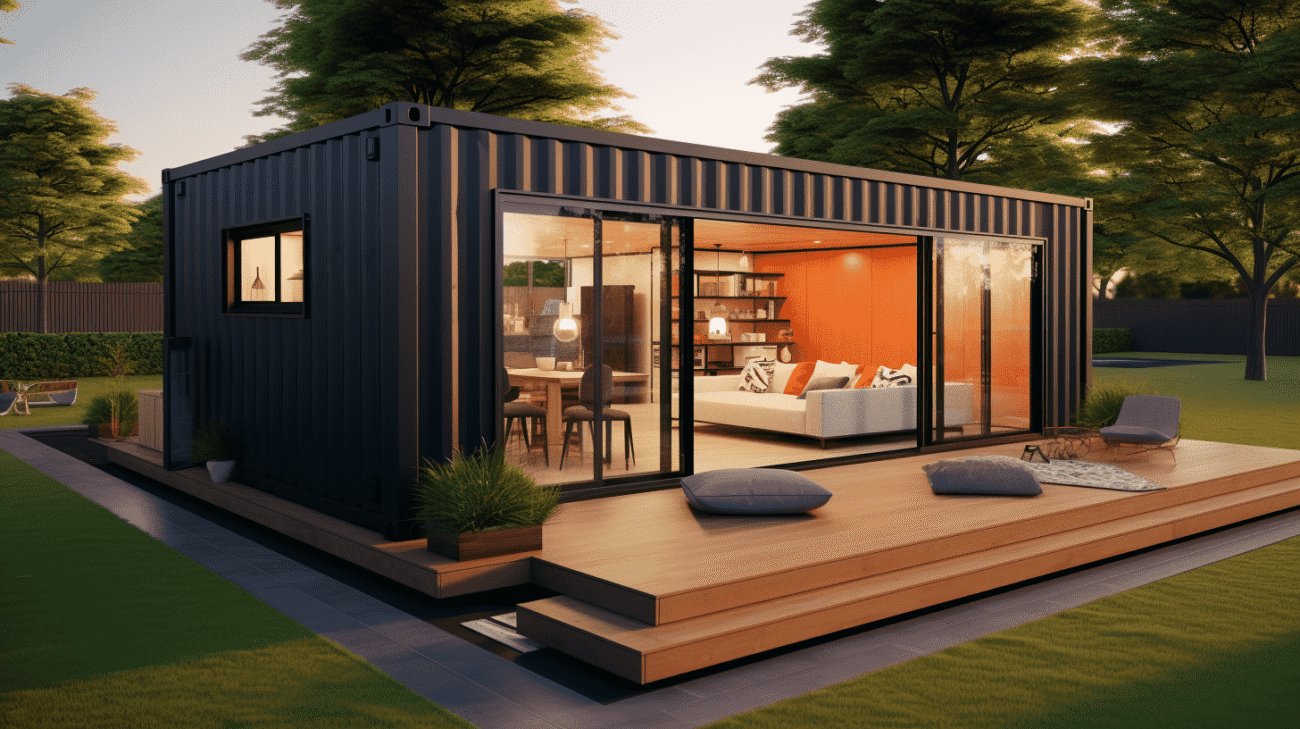
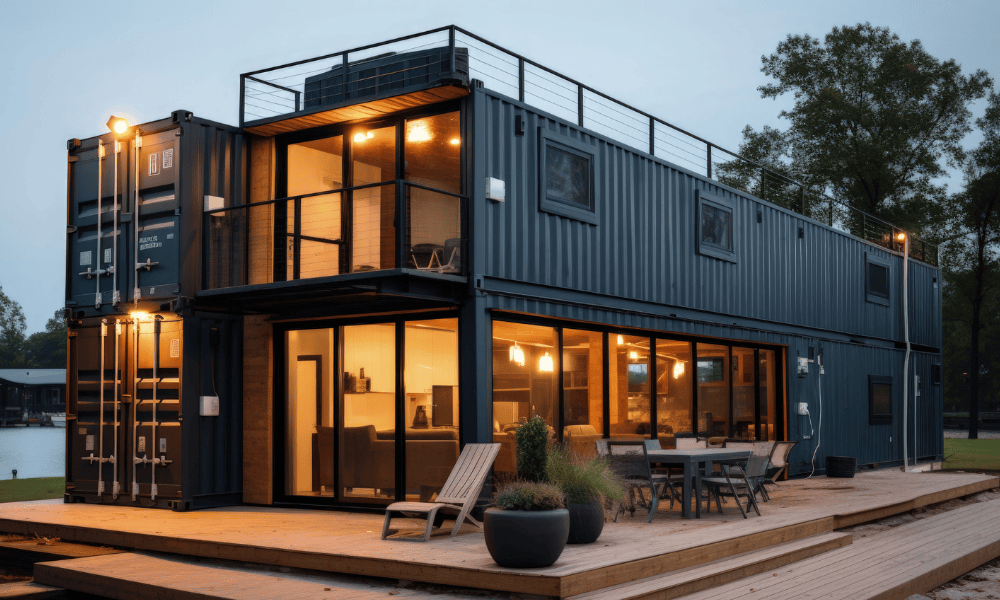
One reason why container conversions are growing in Canada is that they photograph beautifully. There's something visually striking about a matte black container with floor-to-ceiling glass panels sitting in a field, or a row of colourful converted containers forming a retail marketplace in a Canadian city centre.
Visual storytelling plays a real role in how container conversions have spread. Social media and editorial coverage of container homes, offices, and shops have made them aspirational — not just practical. Architects, designers, and developers in Canada have embraced the aesthetic, and the result is a market that's growing both in demand and in design sophistication.
For event organizers and marketing agencies, this visual impact is a genuine business asset. A branded container installation at a trade show or festival creates a strong impression that a tent or booth simply can't match.
Actionable Specifications: What to Look for When Buying a Converted Container
When you're evaluating a container conversion, here are the key specs to pay attention to:
- Container grade: One-trip (near-new), cargo-worthy, or as-is — each has different price and condition profiles
- Size: Standard 20-ft and 40-ft units, plus 10-ft options for tighter spaces
- Wall thickness and steel gauge: Affects structural integrity and insulation capacity
- Modifications included: Windows, doors, insulation type, electrical rough-in, HVAC provisions
- Floor condition: Hardwood or bamboo flooring often replaces the original treated timber floor during conversion
- Delivery specifications: Weight, crane requirements, ground conditions needed for placement
- Warranty and compliance: Ensure modifications meet Canadian building codes for your province
These specs matter whether you're a contractor sourcing a site office or a homeowner planning a backyard studio in Canada.
View our full product listings and specs →
Who Is Using Container Conversions in Canada Right Now?
The short answer: almost everyone.
Construction companies and contractors use them as durable, secure site offices and tool storage. Retailers and small business owners are deploying them as storefronts, food trucks, and pop-up shops at markets and festivals across Canada. Agricultural sector farmers rely on them for grain, equipment, and chemical storage on farms from Saskatchewan to Prince Edward Island.
Residential homeowners and developers in Canada are converting them into garden studios, guest suites, and even primary residences. Industrial and logistics companies use them for on-site storage and temporary operations facilities. Education and healthcare sectors in remote Canadian communities have used container conversions to establish clinics, classrooms, and mobile service units where traditional construction isn't viable.
The breadth of adoption across Canada is exactly why container conversions are growing — there's no single driver. It's a solution that fits dozens of different problems.
Frequently Asked Questions About Container Conversions in Canada
Q: Are converted containers legal to use as homes or offices in Canada? A: Yes, in most provinces, with the appropriate permits. Building codes vary by municipality, so it's important to check local regulations before installation. Most jurisdictions in Canada have established pathways for container-based structures.
Q: How long does a converted container last? A: A well-maintained container conversion can last 25 years or more. The steel structure itself has a far longer lifespan — many containers in service today are 30+ years old and structurally sound.
Q: What are the best customisation options for a Canadian winter? A: Spray foam insulation, double-pane windows, a high-efficiency heating system, and weatherproof door seals are the baseline for cold-climate comfort in Canada. Many customers also add a vapour barrier and heated flooring.
Q: Can I move my container conversion after it's been installed? A: Yes. That's one of the core advantages. As long as the utility connections are designed to disconnect cleanly (which they should be), your container can be relocated with a flatbed truck and crane.
Q: How do I get a quote from Maple Containers? A: Visit maplecontainers.ca to explore our product listings and connect with our team. We'll help you identify the right container size, grade, and conversion package for your specific needs across Canada.
Final Thoughts
Why container conversions are growing in Canada is a question with a lot of good answers: cost efficiency, durability, mobility, customisation, and sustainability. But underneath all of those reasons is something simpler — Canadians are practical people, and container conversions are a practical solution.
Whether you're a farmer in Manitoba, a developer in Toronto, a retailer setting up in Vancouver, or a contractor working a remote site in the Northwest Territories, there's a container conversion that fits your situation. Canada's geography, climate, and economic diversity have made this one of the most versatile building solutions available today.
Explore what's possible at Maple Containers — Canada's trusted source for container sales, conversions, and delivery.
Published by Maple Containers | Serving customers across Canada Home | Products | Blog | Contact