Blog
New vs Used Containers Which Is Right for You

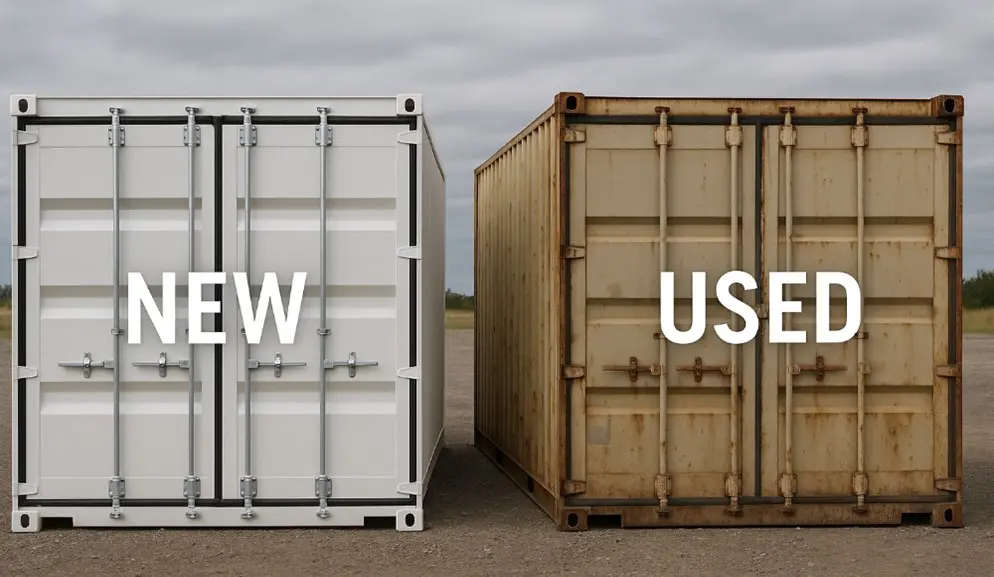
New vs. Used Containers: Which Is Right for You? What You Need to Know First
If you've been searching for shipping containers in Canada, you've likely landed on the same question almost everyone asks before making a purchase: new vs. used containers — which is right for you? It's a fair question, and the honest answer is: it depends on what you're actually doing with it.
Canada's container market has grown significantly over the past decade. Whether you're a contractor in British Columbia needing a secure on-site storage unit, a farmer in Saskatchewan looking for durable grain or equipment storage, or a retailer in Ontario expanding your warehouse footprint on a budget — the type of container you choose will directly affect your project's cost, timeline, and long-term value.
The terms "new" and "used" mean very different things in the container world. A new shipping container, often called a one-trip container, has made exactly one journey — usually from a manufacturer in China to a Canadian port. A used container may have crossed the Pacific dozens of times. Both have real advantages. Neither is automatically better.
This guide breaks it all down practically. We'll walk through what commercial containers actually are, what each type is used for, how to check containers before you store anything in them, and which choice makes more sense for your situation. By the end, you'll know exactly what to look for no guesswork required.
What Are Commercial Containers? A Quick Primer on Uses of Containers
Before comparing new and used, it helps to understand what a container is used for in Canada's commercial and residential landscape.
A commercial container — sometimes called an intermodal container or ISO container is a standardised steel box designed for transporting goods by ship, rail, or truck. In Canada, they've evolved far beyond shipping freight.
Common uses of containers across Canada include:
- Storage solutions for construction sites, retail overflow, and agricultural equipment
- Portable offices and site trailers for contractors and project managers
- Retail pop-up shops and mobile marketing activations
- Residential and garden studios for homeowners and developers
- Cold storage units for the agricultural sector and food businesses
- Emergency shelter and healthcare units for rapid-deployment needs
The versatility is what makes them popular. A single container can become a secure tool shed on a farm in Alberta, a climate-controlled archive room for a law firm in Toronto, or a modular classroom expansion for a school in New Brunswick. Canada's geography — from coastal ports to remote northern communities makes containers especially practical for logistics companies and industrial operators who need reliable, moveable infrastructure.
Understanding what you need yours to do is the first step. That determines whether new or used is the smarter buy.
Why Should We Use Containers? The Real Reasons Canadians Choose Them
Let's be direct about why containers have become a go-to solution across Canada.
Durability is the starting point. Steel containers are built to survive ocean crossings in brutal weather. That same resilience translates well to Canadian winters, high-wind prairie seasons, and the freeze-thaw cycles that damage conventional storage buildings. A properly maintained container new or used will outlast a wood-frame shed by decades.
Security matters too. Container doors lock with marine-grade hardware. For construction companies storing expensive tools and equipment overnight on a job site in Canada, that level of protection is hard to replicate cheaply.
Mobility and portability change what's possible. Unlike a permanent structure, a container can be relocated. If your business moves, your storage moves with it. Event organizers and marketing agencies across Canada love this flexibility — build out a branded retail experience once, then deploy it at multiple venues throughout the year.
Customization options are broader than most people expect. New containers offer a clean slate. Used containers, once inspected and treated, can be retrofitted with everything from insulation and electrical systems to custom shelving, ventilation, and high-security locking mechanisms. The container itself is just the shell; what you do with it is up to you.
Sustainability is increasingly a factor. Repurposing a used container keeps it out of the scrap cycle, reduces manufacturing demand, and supports circular economy principles many Canadian businesses and municipalities are actively pursuing.
New vs. Used Containers: Which Is Right for You — The Key Differences
This is where the real decision happens.
New (One-Trip) Containers: What You're Getting
A new container arrives in Canada with virtually no wear. The floor is clean, the walls are straight, the doors seal perfectly, and the surface coat is intact. There's no previous cargo contamination to worry about.
Key features of new containers:
- Uniform condition — no dents, rust patches, or structural repairs
- Clean, odour-free interior — critical for food storage, medical use, or sensitive archiving
- Full manufacturer certification, often with documentation
- Better starting point for high-end customization (converted offices, retail spaces, residential units)
- Higher upfront cost — typically 30–50% more than comparable used units
New containers make the most sense when your project demands a pristine interior, when you're building something that will be client-facing (a retail activation, a branded pop-up, an architectural conversion), or when contamination risk cannot be tolerated.
In Canada, used shipping containers for sale are far more widely available than new ones so new containers sometimes require longer lead times depending on your location and the container size you need.
Used Containers: What You're Actually Getting
Used doesn't mean broken. In Canada's container resale market, most units are graded into condition tiers wind and watertight (WWT), cargo-worthy (CW), and as-is. Understanding the grade matters enormously.
Key features of used containers:
- Lower upfront cost — often significantly cheaper for the same size
- Wider immediate availability across Canada
- Cosmetic wear is normal — surface rust, minor dents, paint fading
- May require inspection and minor repairs before use
- Excellent for straightforward storage, site security, or agricultural use
For construction companies, industrial operators, and agricultural businesses in Canada, a cargo-worthy used container is almost always sufficient. You're storing tools, grain, fertiliser, or equipment — not exhibiting merchandise or welcoming clients inside.
The key caveat: you must check the containers before you store anything in them. This is non-negotiable.
Why Must I Check the Containers Before I Store Them?
This question comes up constantly — and for good reason.
A used container's exterior can look solid while the interior has hidden problems. Before loading anything in, inspect these points:
1. The roof. Stand inside on a bright day and close the doors. Any light coming through means water can too. Roof rust or small perforations will cause moisture damage to everything inside.
2. The floor. Shipping container floors are typically tropical hardwood (bamboo or apitong). Check for soft spots, rot, or chemical staining from previous cargo. For food storage or sensitive goods, request the container's cargo history.
3. The door seals. Run your hand along the rubber gaskets. Cracked or compressed seals allow moisture infiltration — a real problem in Canada's humid summers and freeze-thaw cycles.
4. Structural integrity. Check corner posts and the base rails for significant rust-through or deformation. Minor surface rust is cosmetic. Deep pitting or corrosion along welds is structural and should disqualify the unit.
5. Odour. Certain chemicals used in previous cargo (fumigants, solvents, food products) leave residue. If the interior smells strongly of anything, ask about cargo history before proceeding.
A reputable Canadian container supplier will provide inspection reports and condition grading upfront. If a seller can't tell you a container's grade or history, that's a signal to keep shopping.
Customization Options: What You Can Do With Either Type
Whether you choose new or used, containers are highly adaptable. Here's what's possible across both types:
For storage and logistics use: Shelving systems, peg-board walls, internal lighting, ventilation fans, and heavy-duty lock boxes are all straightforward retrofits.
For office and workspace conversion: Insulation (spray foam or rigid board), HVAC systems, electrical panels, window cutouts, man doors, and interior wall cladding transform a container into a functional workspace. Event organizers and marketing agencies in Canada use this route constantly for branded activations.
For residential and accessory structures: Architects and developers across Canada are increasingly integrating containers into ADU (accessory dwelling unit) projects — container homes, garden studios, and modular guest suites. This application almost always calls for a new or near-new unit as the base.
For agricultural and cold storage: Insulated containers with interior linings handle grain, produce, and veterinary supplies. Farms across Canada's Prairie provinces rely on these for seasonal overflow storage.
The customization options available to you are essentially the same whether your container is new or used — what changes is your starting condition and, therefore, your preparation costs.
Visual Storytelling: Durability and Security in Real-World Canadian Conditions
It's worth painting a picture here.
Imagine a construction company in Canada's northern Ontario — managing a multi-month highway infrastructure project in temperatures that swing from –30°C in January to +30°C in August. They need tool and material storage that locks securely, won't buckle under snow load, and won't corrode through a single season. A cargo-worthy used 20-foot container, inspected and re-painted, costs a fraction of a purpose-built site cabin and performs comparably.
Now picture a retail brand launching a pop-up shopping experience at three different Canadian festivals across the summer. They need a mobile structure that looks sharp, brands well, and travels easily on a flatbed. That's a new one-trip container, modified with a fold-out counter, exterior graphics, and interior shelving. The premium is worth it because the container is the brand experience.
Both decisions are correct. The context makes the call.
Actionable Specifications: Sizes, Grades, and What to Request
When you reach out to Maple Containers or browse our product listings, here's the technical baseline to bring with you:
Standard sizes:
- 10-foot containers — tight spaces, personal storage
- 20-foot containers — most popular size across Canada for storage and site use
- 40-foot containers — high-volume storage, office conversions, large-format retail
- 40-foot high-cube (9'6" interior height) — preferred for live/work conversions and walk-in applications
Condition grades to request:
- One-Trip / New — single ocean crossing, near-new condition
- IICL Grade — premium used, minimal wear, suitable for sensitive contents
- Cargo-Worthy (CW) — structurally sound, wind and watertight, minor cosmetic wear
- Wind and Watertight (WWT) — functional storage, not certified for cargo transport
- As-Is — inspect carefully before accepting; typically priced for budget applications
Ask your supplier for a photo set of the specific unit before purchase. Reputable suppliers in Canada provide this as standard.
Sustainability: Why Used Containers Are a Green Choice
For businesses and individuals in Canada with sustainability commitments, used containers offer a compelling environmental argument.
Manufacturing a new ISO container consumes significant steel, energy, and chemical coatings. Each container already in circulation represents that embedded carbon — and giving it a second or third life in Canada rather than scrapping it keeps that carbon out of the recycling furnace.
Organizations in Canada's education and healthcare sectors — often navigating tight capital budgets and institutional sustainability targets — increasingly specify used containers for modular expansion projects precisely because they tick both boxes: cost-effective and demonstrably lower environmental impact.
Repurposing is why the use of containers is good for more than just the bottom line. It's good for the broader conversation about how Canada builds, stores, and operates sustainably.
FAQs: New vs. Used Containers — Your Questions Answered
Q: Are used shipping containers for sale in Canada safe to use for food storage? Yes, with conditions. Request cargo history, inspect the floor carefully for chemical residue, and ensure the door seals are intact. If in doubt, a food-grade liner is inexpensive insurance.
Q: How long will a used container last in Canada's climate? A well-maintained cargo-worthy container has a remaining functional life of 10–20+ years in Canadian conditions. Annual inspection and spot treatment of surface rust extends that considerably.
Q: What size should I order for a construction site in Canada? Most construction sites in Canada work with a 20-foot unit for tools and materials. If you need a site office plus storage, a 40-foot unit with a partition is more efficient than two separate containers.
Q: Can I customize a used container into a retail space? Absolutely. Many Canadian retailers and marketing agencies do exactly this. Budget for interior cleaning, structural inspection, and any necessary surface prep before modification work begins.
Q: Is buying used containers better value than renting in Canada? For projects longer than 12–18 months, ownership typically wins financially. For short-term or event-based needs, rental keeps capital free. Contact our team to run the numbers for your specific situation.
Q: How do I know a container is wind and watertight before I buy? Ask for the supplier's condition certification and a photo set. The light-through-closed-doors test (described above) is a reliable field check. A reputable Canadian supplier will stand behind their grading.
Making the Call: New vs. Used Containers — Which Is Right for You?
Here's a practical summary:
Choose new (one-trip) when:
- The interior condition is client-facing or aesthetically important
- You're doing a high-end residential, retail, or office conversion
- Contamination risk cannot be accepted (pharmaceuticals, specialty food, archival storage)
- You want full documentation and certification from day one
Choose used (cargo-worthy or WWT) when:
- You need straightforward storage at a lower capital cost
- The application is industrial, agricultural, or construction-site storage
- You're buying multiple units and budget efficiency matters
- You're prioritizing sustainability through repurposing
Canada's container market offers both, and the right supplier will help you find the right grade at the right price for your specific project.
At Maple Containers, we supply new and used containers across Canada — with honest grading, transparent pricing, and real inspection documentation. Browse our container listings, read more on our blog, or get in touch to talk through your project with someone who knows containers inside and out.
Published by Maple Containers | Serving customers across Canada Related reading: Container Sizes Explained | How to Prepare Your Site for Container Delivery | Container Modifications and Customization Options